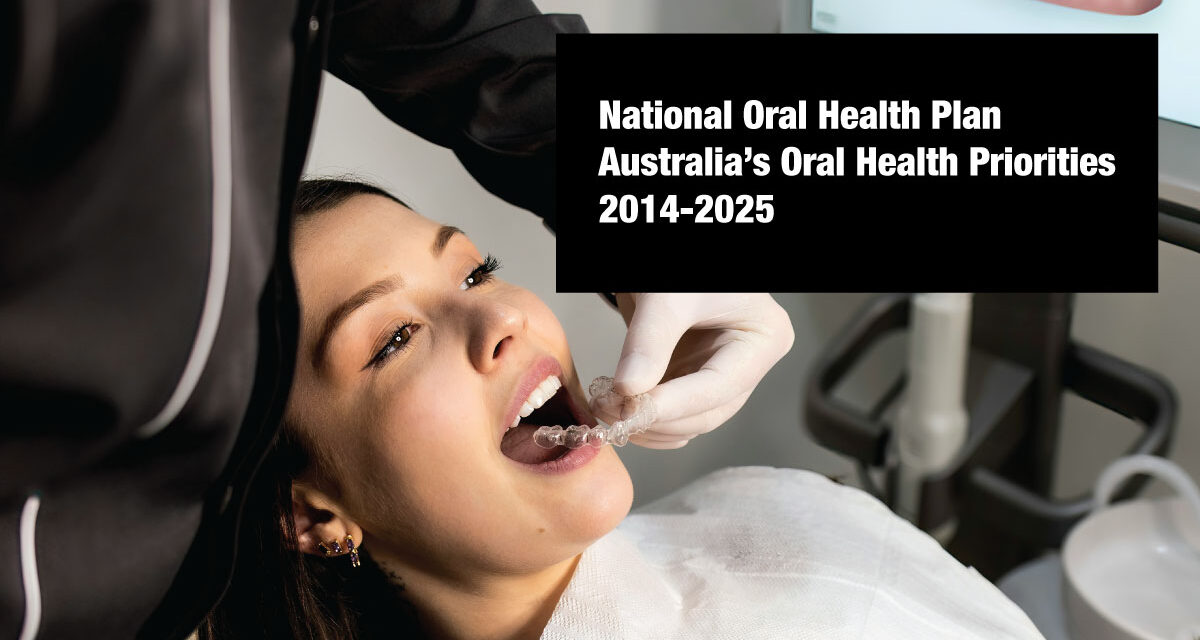
National Oral Health Plan: Australia’s Oral Health Priorities
The National Oral Health Plan is Australia’s key framework for improving oral health, reducing preventable dental disease and making dental care more accessible. The 2015-2024 plan set out national goals for prevention, access, workforce, safety, quality, research and priority populations. A newer 2024 evidence-building paper shows how the next National Oral Health Plan could build on this work for 2025-2034.
Oral health affects much more than teeth. It affects how people eat, speak, sleep, work, learn and take part in everyday life. Poor oral health can cause pain, infection, embarrassment, low confidence and reduced quality of life. It can also place pressure on general practice, emergency departments and hospitals.
The two publications show a clear policy direction. Australia needs stronger prevention, better access to dental care, closer links between oral health and general health, and targeted action for people who face the greatest barriers.
What is the National Oral Health Plan?
The National Oral Health Plan provides a national framework for improving oral health across Australia. The 2015-2024 plan, titled Healthy Mouths, Healthy Lives, aimed to improve health and wellbeing by improving oral health status and reducing the burden of poor oral health.
The plan had two main goals. The first was to improve oral health by reducing the incidence, prevalence and effects of oral disease. The second was to reduce inequalities in oral health across the Australian population.
These goals remain important. Australia has made progress in oral health over recent decades, but many people still experience preventable dental disease. The burden is not shared equally. People on low incomes, Aboriginal and Torres Strait Islander people, people in regional and remote areas, and people with additional or specialised health care needs often face higher disease levels and greater barriers to care.
The 2024 evidence-building paper confirms that many stakeholders still see the current plan as a strong base. Participants supported keeping the six foundation areas, while updating the next National Oral Health Plan to reflect newer priorities such as technology, data, leadership and collaboration.
Why the National Oral Health Plan matters
Oral health is part of general health. A healthy mouth helps people eat, speak and socialise without pain or discomfort. Poor oral health can make daily life harder. It can affect diet, sleep, confidence, relationships, school attendance and work participation.
The 2015-2024 plan also makes it clear that oral disease has system-wide costs. More than 63,000 Australians were hospitalised each year for preventable dental conditions. The plan identified oral conditions as the third highest reason for acute preventable hospital admissions in Australia.
Cost is a major issue. In 2011-2012, individuals paid 57% of total dental care costs. This was much higher than the 12% paid by individuals for other health services. In 2012-13, 18.8% of Australians aged 15 and over who needed dental care delayed or avoided it because of cost.
These figures explain why dental access is such a strong theme in the National Oral Health Plan. When people delay treatment, small problems can become serious. Pain, infection and tooth loss can follow. Some people then seek help from GPs or emergency departments because they cannot access timely dental care.
Oral health problems in Australia
The 2015-2024 plan reported that more than 90% of adults and 40% of young children had experienced tooth decay at some stage in life. It also found that three in ten adults had untreated tooth decay.
Children also experience a large burden of dental disease. The plan cited data showing that 51% of six-year-old children and 45% of 12-year-old children had experienced tooth decay. Children in the lowest socio-economic areas had 50% to 70% more decay-affected teeth than children in the most advantaged areas. Aboriginal and Torres Strait Islander 15-year-olds had 50% more tooth decay than the rest of the population.
Adult oral health also varies by income, location and concession card status. Untreated decay increases with remoteness. It is also higher in low-income households and among concession card holders. Around 23% of Australian adults had moderate to severe gum disease.
The plan also identified oral cancer as a serious concern. It described oral cancer as the eighth most common cancer in Australia. It noted higher risk among older adults, men, and Aboriginal and Torres Strait Islander people.
These problems are not only clinical issues. They reflect wider social, economic and environmental factors. Income, education, access to transport, food costs, health literacy, culture, water fluoridation and service availability all shape oral health outcomes.
Access to dental care remains a major issue
Access is one of the strongest themes in the National Oral Health Plan. Regular preventive care supports better oral health. Problem-based care often leads to worse outcomes because people wait until pain or infection occurs.
The 2015-2024 plan reported that only 39% of Australian adults had a favourable dental visiting pattern. This means they usually saw the same dentist, attended at least once a year, and went for check-ups rather than only for problems. By contrast, 29% of adults had an unfavourable visiting pattern.
Income plays a major role. The plan found that 22% of people in lower-income households had favourable visiting patterns, compared with 56% of people in higher-income households.
Cost is not the only barrier. People may also face problems with transport, clinic availability, appointment times, cultural safety, communication, mobility, fear, trust and health literacy. The plan described access as a mix of service factors and consumer factors. Services need to be approachable, acceptable, available, affordable and appropriate. People also need the ability to recognise a need, seek care, reach services, pay for care and engage with providers.
This is why the plan called for practical service planning. It recommended access guidelines, transport solutions, better use of the Child Dental Benefits Schedule, reduced preventable hospitalisations, and timely access to dental surgery.
The 2024 evidence-building paper shows that stakeholders still see access as a top priority. In the co-design workshop, 33% of participants chose a vision focused on affordable and accessible oral health care for all Australians.
Prevention and fluoride in the National Oral Health Plan
Prevention sits at the centre of the National Oral Health Plan. Many oral diseases are preventable. Good prevention can reduce pain, avoid complex treatment and lower costs for individuals and the health system.
The plan placed strong emphasis on fluoride. It noted that fluoride reduces tooth decay and can reach people through fluoridated water, toothpaste and other forms. Community water fluoridation was described as a cost-effective and equitable public health measure.
At the time of the plan, 82.2% of Australians had access to fluoridated water. However, some communities still missed out because of remoteness, small population size or local policy choices.
The plan recommended extending access to fluoride. It also supported alternative fluoride programs for communities without fluoridated water. These could include fluoride varnish and affordable fluoride toothpaste.
Prevention is not only about fluoride. The plan also promoted oral health messages, better nutrition policies, reduced sugary drink consumption, tobacco control and stronger links with general health campaigns. This approach recognises that oral disease shares risk factors with other chronic diseases.
For example, high sugar intake increases the risk of tooth decay. Tobacco use increases the risk of gum disease and oral cancer. Alcohol consumption can also increase oral cancer risk. These risk factors also affect broader health.
A strong prevention strategy should make healthy choices easier. This means access to fluoridated water, affordable oral hygiene products, healthy food, clear public information and early support from health and community workers.
The six foundation areas of the National Oral Health Plan
The 2015-2024 National Oral Health Plan used six foundation areas. These areas created the structure for national action.
Oral health promotion
The first foundation area focused on oral health promotion. Its goal was to give all Australians access to supportive environments, clear information and evidence-based programs.
The plan called for wider access to fluoride, consistent oral health messages, stronger nutrition policies and better oral health skills among health, community and education workers. It also recommended stronger links between oral health and general health policy.
Accessible oral health services
The second foundation area focused on access. Its goal was for all Australians to receive appropriate and affordable oral health care within a clinically suitable timeframe.
The plan recommended access guidelines, transport support, better use of the Child Dental Benefits Schedule and action to reduce preventable dental hospitalisations. It also called for timely dental surgery access.
Systems alignment and integration
The third foundation area focused on better alignment between oral health and the wider health system. Australia’s oral health system includes public, private and non-government services. It also involves different funding sources.
This can create gaps. People may struggle to move between services. Oral health may not be included in general health planning. The plan called for national leadership, better models of care, shared information systems and funding arrangements that reflect real service needs.
Safety and quality
The fourth foundation area focused on safety and quality. The plan supported accreditation, clinical audit, benchmarking and stronger consumer involvement. It also encouraged oral health standards across sectors such as aged care, childcare and disability services.
This matters because oral health care should be safe, effective and person-centred. Consumers should help shape how services are designed, delivered and evaluated.
Workforce development
The fifth foundation area focused on workforce development. The plan found that Australia had increased the number of dental practitioners, but distribution remained a problem. Some areas and population groups still had poor access to care.
The plan called for better workforce planning, stronger training for priority population needs, improved distribution and better workforce data. It also supported oral health training for non-dental workers.
Research and evaluation
The sixth foundation area focused on research and evaluation. Good policy needs good data. The plan noted that Australia needed more regular population-level oral health data and better service-level data.
It called for a national oral health research strategy. It also recommended routine data collection on oral health status, access to care, oral health behaviours and priority populations.
Priority populations in the National Oral Health Plan
The National Oral Health Plan identified four priority populations. These groups experience higher oral disease levels, greater access barriers or both.
People who are socially disadvantaged or on low incomes
People on low incomes often face higher dental costs as a share of household income. They may delay care, attend only when pain occurs, or miss out on preventive treatment. The plan reported that adults on low incomes had more than double the rate of poor oral health compared with people on higher incomes.
The plan recommended integrated services in settings already used by people facing disadvantage. It also called for better oral health literacy and funding models that recognise the extra costs of culturally and linguistically appropriate care.
Aboriginal and Torres Strait Islander people
The plan found that Aboriginal and Torres Strait Islander people experience poor oral health earlier, more severely and more commonly than the rest of the population. It also noted that they are less likely to receive preventive treatment, which can lead to emergency-based care.
The plan recommended community engagement, cultural competence, integrated primary care, a larger Aboriginal and Torres Strait Islander oral health workforce, and funding reforms.
People living in regional and remote areas
People in regional and remote areas often face fewer services, longer travel times and higher costs. The plan found that adults in these areas had higher levels of tooth loss and untreated decay.
The plan recommended alternative fluoride access, lower costs for nutritious food and oral hygiene products, flexible service delivery, and stronger recruitment and retention of dental professionals.
People with additional or specialised health care needs
This group includes people with disability, severe mental illness, complex medical conditions and frail older people. The plan reported that people with severe mental illness were more than three times more likely to have lost all their teeth.
The plan recommended better data, improved oral health literacy for carers and care workers, stronger workforce capacity and better physical access to dental facilities.
What the 2024 evidence paper adds
The 2024 publication, Building the evidence base for the next National Oral Health Plan, gives an early view of how the next plan may develop. It is not the final 2025-2034 plan. It summarises stakeholder engagement from interviews, written submissions and a co-design workshop.
The Department of Health and Aged Care engaged HealthConsult, with ThinkPlace, to support expert analysis and stakeholder engagement. During November and December 2024, the team spoke with more than 50 people from 30 organisations. These included state and territory health departments, government agencies, peak bodies, universities, consumer advocacy groups and specialist organisations.
Participants said the current plan remains appropriate and provides a strong base. They supported keeping the six foundation areas, with some changes to reflect new priorities. These included data, technology, leadership and collaboration.
They also identified implementation challenges. These included funding, leadership, monitoring and private sector involvement. These issues matter because a plan only works if governments, providers and communities can put it into practice.
Participants agreed on two aims for the next National Oral Health Plan. The first was to improve oral health for all Australians. The second was to make oral health an essential part of overall health.
The 2024 paper also shows support for a practical and action-focused next plan. Participants wanted a plan that is simple, inspiring and adaptable. They also wanted local communities and governments to have room to respond to local needs and monitor progress over time.
What the next National Oral Health Plan needs to do
The next National Oral Health Plan will need to build on the existing framework. It should keep what works, but make implementation clearer.
The 2024 paper identified four areas that could help mobilise the next plan. These were stronger private sector engagement, better leadership and shared responsibility, improved data availability and reporting, and better use of technology.
Private sector involvement is important because many Australians receive dental care outside the public system. Better collaboration with private practices could support access, prevention and data collection. Stakeholders also saw the Child Dental Benefits Schedule as a major success. They suggested that stronger use of CDBS data could show who uses the scheme, where care is delivered and what types of treatment children receive.
Leadership also matters. Stakeholders discussed stronger national leadership and clearer shared responsibilities. This could help align governments, services, professional groups and communities.
Data is another priority. Without good data, it is hard to know where oral health is improving, where access is poor and which groups need more support. The next plan needs clear indicators, regular reporting and better information about priority populations.
Technology could also support access and planning. It may help with service navigation, data collection, communication, outreach and care coordination. Technology alone will not solve access problems, but it can support better systems when used well.
Should the priority populations change?
The 2024 evidence-building paper suggests the next National Oral Health Plan should keep the four existing priority populations. These groups still face clear barriers and worse outcomes.
However, stakeholders also identified additional groups that may need more focus. These included people over 65, people living with disability, people who have experienced domestic violence, and people with mental health or complex medical conditions.
This does not mean the current categories are wrong. It means people’s needs often overlap. A person may live in a remote area, have a disability and face financial stress. Another person may be older, live with complex medical conditions and rely on carers for daily oral hygiene.
The next plan should recognise these overlapping needs. Services need to respond to the whole person, not only one category.
What this means for dental care in Australia
The two publications show that Australia understands the main oral health challenges. The evidence points to the same priorities again and again.
Australia needs strong prevention. This includes fluoride, healthy food environments, reduced sugar intake, tobacco control and clear public messages.
Australia needs better access. Dental care must be timely, affordable, culturally safe and practical. This is especially important for people who face cost, transport, disability, language or location barriers.
Australia needs stronger integration. Oral health should sit inside broader health care, aged care, disability care, mental health care and primary care. It should not be treated as separate or optional.
Australia needs better data. Policymakers need to know who is missing out, where services are working and which programs deliver real outcomes.
Australia also needs a workforce that can meet community needs. This includes dental practitioners and non-dental workers who can support screening, prevention, referral and daily oral care.
Key takeaway
The National Oral Health Plan gives Australia a clear direction for better oral health. It shows that prevention, access, workforce planning, data and targeted support all matter.
The 2015-2024 plan created a strong national framework. The 2024 evidence paper shows that the next plan should keep that structure while becoming more practical, measurable and action focused.
The next National Oral Health Plan needs stronger leadership, better monitoring, more private sector involvement and better use of technology. It also needs to keep priority populations at the centre.
Most importantly, the next plan must turn evidence into practical change. Better oral health will not come from policy alone. It will come from prevention, early care, fair access and services that work for the people who need them most.
References
- Healthy Mouths, Healthy Lives: Australia’s National Oral Health Plan 2015-2024, COAG Health Council, 2015.
- Building the evidence base for the next National Oral Health Plan, Department of Health and Aged Care, HealthConsult and ThinkPlace, December 2024.